The Authority Ecosystem Model for Coaches & Independent Professionals: Why Funnel-Based Marketing Fails in Coaching Businesses and What Actually Drives High-Trust Client Acquisition
The Problem: Why Funnels Became The Default Advice In Coaching Businesses
If you search anything related to coaching business, client acquisition, or how to get coaching clients, you will repeatedly see one dominant answer:
“Build a funnel.”
Webinar funnels. Lead magnet funnels. Free call funnels. High-ticket funnels.
The entire coaching industry has been conditioned to believe that success depends on building increasingly complex funnel systems.
If you want a technical breakdown of how these funnels are typically structured, you can read:
But before we go deeper, let’s simplify this.
Why The Funnel Obsession Is Misleading
The hype around funnels creates a distorted picture of how buying actually happens in the world.
Funnels are heavily overrepresented in online marketing conversations because they are easy to package, teach, and sell as a formula.
As a result, the word “funnel” has gradually taken on a much narrower meaning.
In the coaching industry, it is rarely used to mean a broad customer journey anymore.
They use it to mean a very specific internet-marketing structure:
- hook
- bait
- low-ticket entry
- upsell sequence
- high-ticket close
That narrow model is what has been overhyped, over-applied, and wrongly treated as the default growth model for coaching businesses.
This creates a disconnect.
Because most buying decisions in the real world do not happen through a narrow hook → bait → low-ticket → upsell sequence.
Most buying happens through:
- visibility
- familiarity
- comparison
- trust
- timing
That is how people buy services, experts, advisors, educators, and transformation-oriented work.
The problem is not that funnels exist.
The problem is that the coaching industry copied a narrow internet-marketing model and treated it as universal buying psychology.
What A Typical Funnel Looks Like (Explained Simply)
Imagine a game stall in a fair.
- You are given a small free toy.
- Then you are invited to play a game.
- Then you are told there is a bigger prize if you pay more.
- Then you are told there is an even bigger prize if you upgrade again.
That is a funnel.
In coaching business terms, it becomes:
- Free PDF or webinar (hook)
- Low-ticket offer
- Upsell
- High-ticket coaching program
This is presented as a “system”.
But here is the deeper issue.
The Structural Problem With Funnels In Coaching Businesses
Funnels are not inherently wrong.
They are simply misapplied in the coaching industry.
Funnels are designed for:
- Fast decisions
- Low trust environments
- Standardized products
- Scalable transactions
Coaching is the opposite.
- High trust required
- Deep personal decision
- Identity-level transformation
- Long-term engagement
When a short-cycle transaction model is applied to a long-cycle trust decision, distortion happens.
Not All Funnels Are The Same: Transaction Funnels vs Trust Funnels
Before rejecting funnels entirely, we need to make an important distinction.
There are two fundamentally different types of funnels.
1) Transaction Funnels
These are designed for:
- fast decisions
- low trust environments
- standardized products
- high-volume conversion
Examples include:
- e-commerce products
- digital tools and SaaS
- low to mid-ticket information products
In these contexts, funnel-based marketing works efficiently.
2) Trust Funnels
These operate very differently.
They are designed for:
- high-trust decisions
- identity-level change
- long-term engagement
- relationship-based commitment
Coaching falls entirely into this category.
The problem is not that funnels exist.
The problem is that transaction funnel logic is applied to trust-based decisions.
That is where distortion begins.
Why Coaching Cannot Be Sold Like A Commodity
A commodity is bought quickly.
Coaching is not.
A commodity is standardized.
Coaching is personal.
A commodity can often be sold on convenience, price, and urgency.
Coaching cannot.
In a commodity purchase, the buyer often asks:
“How much does it cost?”
In a coaching purchase, the buyer is really asking:
“Can I trust this person?”
“Do I feel understood here?”
“Is this the right fit for me?”
That is why coaching businesses break when they borrow sales logic from products that do not require trust, depth, or relational commitment.
How Funnels Undermine The Coaching Sales Process
1) They Compress Trust Into Artificial Timelines
Trust cannot be built in 60 minutes of a webinar.
But funnel models attempt to compress:
- awareness
- trust
- decision
…into a single session.
This creates:
- resistance
- skepticism
- low-quality clients
2) They Attract Price-Sensitive Instead Of Commitment-Driven Clients
When the entry point is a “free + low-ticket” pathway, you train the market to behave transactionally.
But coaching requires:
- commitment
- readiness
- ownership
This mismatch creates poor client outcomes.
3) They Replace Positioning With Tactics
Most funnel strategies focus on:
- copywriting tricks
- urgency
- conversion optimization
But they ignore:
- authority
- depth
- philosophy
Which are the real drivers of high-value coaching businesses.
4) They Create Short-Term Revenue, Not Long-Term Authority
Funnels can generate revenue.
But they do not build:
- reputation
- market positioning
- long-term demand
And without these, scaling becomes unstable.
This is also why many serious coaches feel uncomfortable when they are told to rely heavily on funnel tactics.
That discomfort is not always a lack of sales ability.
Often, it is an accurate response to a model that does not fit the nature of trust-based transformation.
How Buying Actually Happens: The Market → Shop → Compare → Decide Model
To understand why funnels struggle in coaching, we need to step away from marketing theory and observe real human behaviour.
In the real world, most buying decisions follow a simple pattern.
- People enter a market
- They notice different options
- They enter a few “shops”
- They explore what is available
- They compare across providers
- They return when ready
- Then they buy
This is how people buy:
- clothes
- electronics
- services
- education
And most importantly, this is how people buy trust-based services.
They do not want to be pushed.
They want to explore, understand, and feel confident in their decision.
This model is not complicated.
It is natural.
And because it is natural, it is also more stable and predictable over time.
What “Footfall” And “Shop” Mean In A Coaching Business
In a physical market, people first notice a shop before they enter it.
That same principle applies in coaching.
In a physical market, footfall means people walking past your shop.
In a coaching business, footfall means:
- content
- search visibility
- authority pages
- speaking engagements
- referrals
- podcast appearances
- social and professional presence
In a physical market, the shop is where the buyer experiences the seller.
In a coaching business, the shop is your:
- website
- positioning
- body of work
- proof
- ideas
- presence
In a physical market, the buyer looks at what is available before choosing.
In coaching, that means your:
- programs
- workshops
- frameworks
- pathways
This is not a funnel.
This is a marketplace behaviour pattern.
Once this becomes clear, coaching starts to make more sense as a marketplace of trust rather than a narrow conversion machine.
If you want to understand this deeper, refer:
The Authority Ecosystem Model
This is where the shift happens.
Instead of asking:
“How do I push people through a funnel?”
The better question is:
“How do I create a space where people naturally choose to work with me?”
This is the Authority Ecosystem Model.
Funnels Are Mechanisms. Authority Ecosystems Are Environments.
A funnel is a mechanism.
It is designed to move a person from one step to the next in a predefined sequence.
An Authority Ecosystem is different.
It is an environment.
It allows people to:
- enter at different points
- explore at their own pace
- engage based on readiness
- build familiarity over time
- choose when they are ready
In a funnel, the question is:
“How do I move this person forward?”
In an authority ecosystem, the question is:
“How do I build a space people want to enter and stay in?”
This shift changes everything.
Because instead of forcing movement, you create attraction.
And attraction scales more naturally than pressure.
What Is An Authority Ecosystem?
An Authority Ecosystem is a structured marketplace of:
- presence
- proof
- philosophy
- pathways
…where clients enter, explore, evaluate, and commit at their own pace.
The 5 Core Components Of An Authority Ecosystem
1) Presence
Your visibility in the market.
This includes:
- content
- speaking
- articles
2) Philosophy
Your thinking.
Your frameworks.
Your worldview.
3) Proof
Real outcomes.
Real transformations.
Not claims.
4) Pathways
Clear ways to engage:
- workshops
- programs
- mentorship
5) Proximity
Access to you.
Interaction.
Experience.
Why This Model Is Simpler, Cleaner And More Effective
This model works because it aligns with:
- natural human behaviour
- trust-building processes
- real decision-making patterns
It does not require:
- manipulation
- artificial urgency
- forced conversion
What Coaches Should Do Instead
If you are serious about building a sustainable coaching business:
- Stop treating funnels as the centre of your business
- Start building authority
- Create structured pathways, not pressure systems
- Focus on long-term trust, not short-term conversion
But this does not mean replacing funnels with randomness.
Authority without structure becomes chaos.
Structure without trust becomes pressure.
The correct model is:
market presence + clear pathways + trust-based decision-making.
That is what makes an authority ecosystem commercially effective without becoming manipulative.
If you want a structured roadmap, start here:
About The Author
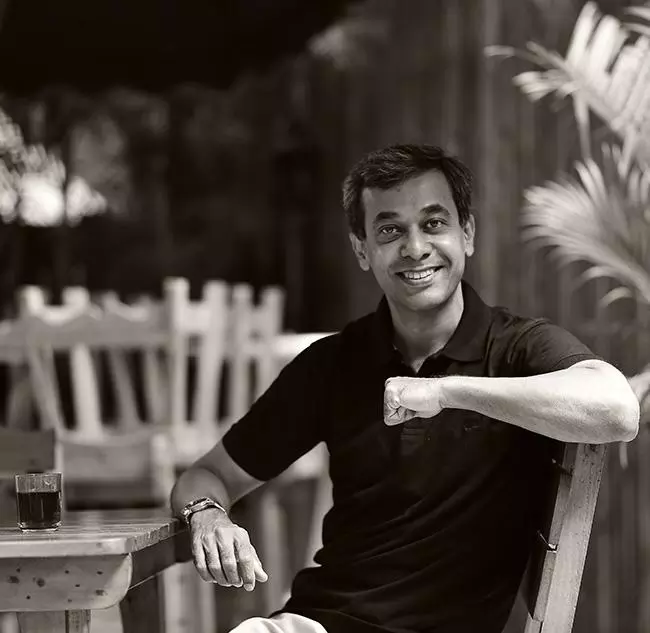
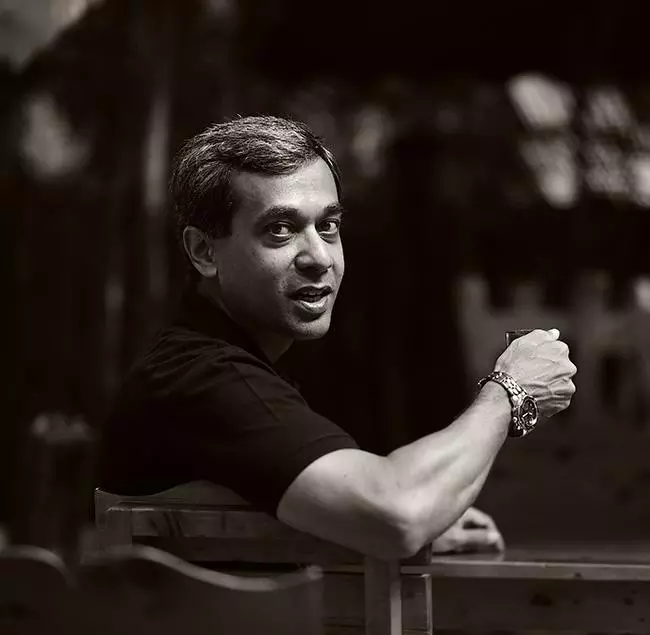
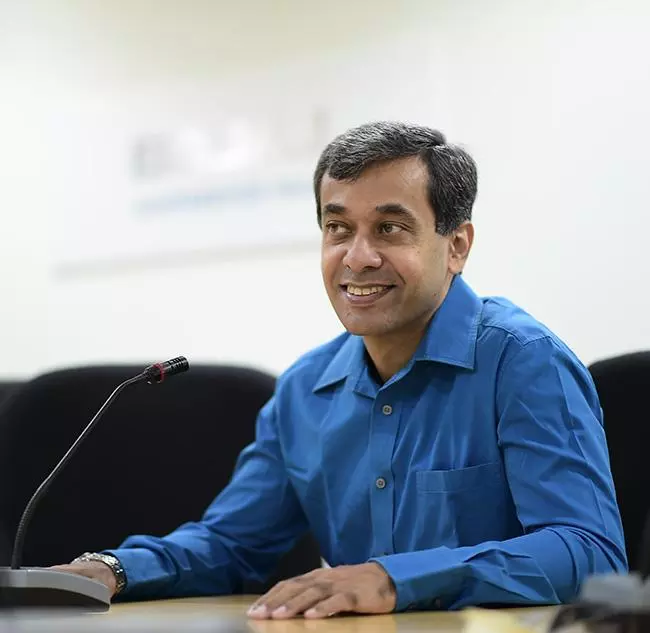
This page is written by Anil Dagia — Business Coach, NLP Master Trainer, and ICF PCC Mentor Coach.
Explore more:
Bottom line: Funnels are tools. Authority ecosystems are structures. Sustainable coaching businesses are built on structure.