Why This Emotional Intelligence Workshop Is Different: Jenga, NLP, Somatic Processes & Coaching-Based Transformation
This Is Not A Typical Emotional Intelligence Training
If you are searching for emotional intelligence training, an emotional intelligence course, an emotional intelligence workshop, or ways of developing emotional intelligence, you will usually come across trainings that teach models, frameworks, slides, concepts, and communication tips.
That has value. But that is not what this workshop does.
This page explains why this process is different.
This workshop uses Jenga, NLP, somatic processes, and coaching to help people move through the four parts of emotional intelligence — self-awareness, self-regulation, social awareness, and social skills — not as theory, but as lived experience.
Watch The Video: Why This Emotional Intelligence Workshop Is Different
Watch this YouTube video to understand why most emotional intelligence training does not create real change, and what happens when NLP, somatic processes, and coaching are integrated into one transformation framework.
Click to watch on YouTube and explore the deeper model behind emotional intelligence, NLP, somatic awareness, and coaching-based transformation.
If you are trying to decide whether this kind of experiential, coaching-based emotional intelligence work is the right fit for you, read Is Emotional Intelligence Training Right for You?.
In other words, this is not merely about about emotional intelligence. It is about embodying emotional intelligence.
That distinction matters. Because many people do not need one more explanation of emotions. They need a process that helps them improve emotional quotient, increase emotional intelligence, and build real emotional resilience in the middle of life, work, relationships, leadership, and inner conflict.
What Most Emotional Intelligence Trainings Do — And What This Workshop Does Instead
Many conventional emotional intelligence training programs focus on teaching the fundamentals of emotional intelligence, the key elements of emotional intelligence, and the language of EI.
That usually means:
- explaining the emotional intelligence models
- defining emotional triggers, empathy, and regulation
- teaching reflective or communication exercises
- helping people understand what emotional intelligence is
This workshop does something different.
It does not primarily teach people about emotional intelligence.
It places them inside a structured experiential process where emotional patterns become visible, speakable, coachable, and transformable.
That is why this is better understood as a coaching-based emotional intelligence workshop rather than a standard EI class.
It uses emotional intelligence as the doorway. But the real vehicle is coaching. And because of that, it creates a depth of internal movement that many information-heavy workshops never reach.
The Core Difference: This Workshop Builds Embodiment, Not Just Understanding
There is a major difference between knowing the language of emotional intelligence and actually being able to live it when you are stressed, ashamed, triggered, conflicted, silent, defensive, over-controlled, or emotionally flooded.
That is the gap this workshop is designed to address.
Instead of teaching emotional intelligence as a conceptual subject, this process helps participants:
- notice what they suppress
- name what they usually avoid
- feel where emotions live in the body
- see the cost of emotional suppression
- practice vulnerability, empathy, and regulation in real time
- rebuild emotional meaning through new beliefs, truths, and conscious habits
This is why the process creates emotional integration, not just emotional vocabulary.
The Four Pillars Of Emotional Intelligence Are Not Taught First. They Are Experienced First.
One of the strongest reasons this workshop is different is that it moves participants through the four parts of emotional intelligence in sequence, but through lived process rather than lecture.
1) Self-Awareness
The work begins by bringing hidden emotional material into awareness. Participants identify emotions they suppress, avoid, hide, or carry silently. The Jenga structure becomes a metaphor for the emotional architecture they have built over time.
This is not abstract emotional intelligence how to advice. It is a direct encounter with their own emotional patterning.
2) Social Awareness
When participants work with blocks carrying emotions that are not their own, they begin to see how other people also carry shame, guilt, grief, embarrassment, fear, and inner conflict. This creates empathy through shared humanity rather than through an intellectual explanation of empathy.
3) Self-Regulation
When the process moves into rebuilding, participants do not merely discuss regulation. They consciously create new beliefs, self-compassionate truths, and emotional commitments. This shifts the work from insight into intention.
4) Social Skills
Throughout the process, participants practice emotional naming, emotional expression, relational listening, shared reflection, and emotionally honest communication. These are core skills for emotional intelligence, but they are developed experientially rather than delivered as tips.
Why Jenga Is Not A Gimmick Here
In weaker workshops, gamification is often cosmetic. It is used to make the room lively, but it does not carry psychological depth.
That is not what is happening here.
In this workshop, Jenga is not entertainment. It is a psychological and somatic instrument.
The tower becomes a living metaphor for:
- suppression
- internal pressure
- stability under strain
- the emotional cost of holding things in
- what happens when one hidden piece is pulled out
- what collapse means
- what rebuilding means
That is why the play-based format works. It lowers defenses without lowering depth.
People often resist heavy emotional work when it is presented too directly. But when the process is mediated through a symbolic, physical, shared structure, emotional truth often emerges faster and more safely.
This is one reason a Jenga EI Model can become more powerful than a conventional classroom-style emotional intelligence training.
If you want the broader emotional intelligence ecosystem around this work, start here:
- What Is Emotional Intelligence? Models, Competencies, Behaviours & Somatic Connections
- The Complete Emotional Intelligence Guide
- Jenga EI Model™ Explained
How NLP Is Woven Into The Workshop
A lot of workshops claim to “use NLP”. In many cases, that means a few words, a few labels, or a few disconnected techniques.
That is not what happens here.
In this workshop, NLP is woven in as process architecture.
It is not always loudly announced. It is embedded in how awareness is elicited, how meaning is refined, how internal experience is surfaced, and how shifts are structured.
NLP Is Used To Increase Precision Of Emotional Awareness
One of the first things people struggle with is vague emotional language. They say things like “I felt bad”, “I was hurt”, “something was off”, or “I just shut down”.
That is where NLP becomes powerful.
Through precision-based inquiry, the process helps participants move from emotional blur into emotional specificity. This matters because transformation becomes easier when experience becomes more clearly named.
That means the workshop is not just helping participants talk. It is helping them see their internal experience with greater accuracy.
NLP Is Used To Surface Internal Conflict
Many people are not simply suppressing emotion. They are divided within themselves.
One part wants to feel. Another part wants to stay functional. One part wants to speak. Another part fears judgment, rejection, weakness, collapse, or loss of control.
This workshop works with that structure.
That is why it goes deeper than surface emotional expression. It addresses the split between feeling and functioning.
NLP Is Used To Reveal How Emotions Are Coded Internally
Different emotions do not only exist as labels. They show up in the mind and nervous system as internal pictures, felt intensities, sensory impressions, meaning structures, and behavioural impulses.
This workshop works with those deeper layers of coding.
So when someone reconnects with guilt, shame, grief, regret, embarrassment, anger, or fear, the process is not limited to “tell us how you feel.” It can also help them notice:
- how the feeling shows up internally
- how long it has been there
- what meaning got attached to it
- what identity-level conclusion formed around it
NLP Is Used To Support Reframing And Emotional Reconstruction
Once awareness has been created, people do not need to be left inside the old emotional architecture.
This is where the rebuilding phase matters.
NLP supports the transition from:
- suppression to acknowledgement
- judgment to self-compassion
- old meaning to updated meaning
- automatic reaction to conscious emotional habit
That is why the workshop does not stop at catharsis. It moves toward structured reorganization.
If you want a deeper map of NLP as a transformation discipline, read:
- What Is NLP? Meaning, Techniques, Benefits & Real-Life Applications
- NLP Techniques Explained
- Advanced NLP Master Practitioner Patterns
How Somatic Processes Are Woven Into The Workshop
Many emotional intelligence trainings remain overly cognitive. They explain emotion, but they do not fully work with where emotion actually lives.
Emotions are not only ideas. They are bodily events.
That is why somatic processes are essential here.
The body is not treated as an afterthought. It is treated as part of the intelligence system.
The Workshop Helps Participants Locate Emotion In The Body
People are often disconnected from the physical experience of their own emotions. They know the story but not the sensation. They know the event but not the holding pattern.
This workshop helps participants notice:
- where tension is held
- where contraction lives
- where numbness shows up
- what shifts in breath, posture, chest, throat, gut, shoulders, or face occur around a given emotion
This is why the work becomes more than reflective conversation. It becomes somatic emotional intelligence.
The Workshop Makes Emotional Awareness Embodied, Not Merely Verbal
When a participant recognizes a pattern in the body, the work changes quality. It becomes immediate. It becomes real. It becomes present-tense rather than merely historical.
That matters because emotional healing often becomes more durable when the body is included in the process rather than bypassed.
The Workshop Uses Somatic Regulation, Not Just Emotional Discussion
Somatic work here supports grounding, release, stabilization, and integration.
That means the workshop is not trying to make people emotionally expressive for the sake of expression. It is helping them stay with experience more consciously and more safely.
This is one reason the workshop can support both emotional insight and emotional mastery.
If this aspect matters to you, read:
- Somatic Emotional Intelligence: How The Body Stores Emotions & How To Release Them
- The Science of Emotional Fitness Gym®
- Somatic EI vs Cognitive EI: Which Creates Deeper Healing?
Why This Is Actually A Coaching Workshop
The deeper insight behind this page is simple:
This workshop is not simply an emotional intelligence workshop. It is a coaching workshop that uses emotional intelligence as the doorway.
That is why it works the way it does.
The facilitator is not merely instructing. The facilitator is:
- eliciting awareness
- asking questions that deepen insight
- helping participants articulate what was previously silent
- guiding reflection without forcing premature interpretation
- supporting meaning-making and forward movement
That is coaching logic.
It is especially visible in how the process moves from emotional naming to emotional meaning, from emotional meaning to emotional ownership, and from ownership to commitment.
This is also why the process can work in both 1:1 coaching and 1:many group facilitation. In a group format, when one participant is coached deeply, many others often receive indirect coaching through identification, resonance, projection, and shared inner recognition.
This is one of the hidden strengths of the method:
coaching a few can coach many.
Why This Naturally Bridges Into ICF Coaching
Because this workshop is coaching-led, it links naturally to the world of ICF coaching.
This does not mean the workshop is a formal ICF skills class.
It means the workshop operates through principles that are deeply compatible with real coaching:
- presence
- listening
- evoking awareness
- powerful questioning
- facilitating client growth
- supporting self-generated insight rather than forcing advice
That is why this page also sits at the bridge between emotional intelligence and coaching.
For people exploring that bridge more deeply, these pages matter:
- What Is ICF Coaching? ACC, PCC, Credentialing Steps, Coaching Careers & Global Opportunities
- ICF Core Competencies Explained
- The Complete ICF Coaching Guide
- NLP vs Coaching: Detailed Comparison
Why This Workshop Is More Powerful Than Tool-Teaching Alone
There is an important difference between teaching people a set of emotional techniques and helping them become the kind of person who can actually use emotional intelligence under pressure.
Tool-teaching often produces recognition.
Embodied coaching produces capability.
This workshop is more powerful not because information is useless, but because information alone is often insufficient.
People do not transform simply because they were told the right emotional language.
They transform when:
- hidden material becomes conscious
- the nervous system becomes involved
- shame loses secrecy
- new meaning becomes believable
- new emotional behaviour becomes practiced
That is why this process can create a stronger after-effect than many classic emotional intelligence course formats.
Additional Differences That Matter
1) It Is Play-Based Without Becoming Shallow
The room becomes lighter, but the work remains deep.
2) It Is Structured Without Becoming Mechanical
The process has sequence and intentionality, but it still leaves room for what emerges naturally.
3) It Is Emotional Without Becoming Dramatic
This matters. The workshop is not designed around emotional performance. It is designed around emotional truth.
4) It Is Transformational Without Becoming Abstract
The participant does not simply “have an insight.” They leave with emotional insight, bodily awareness, reframed meaning, and practical next-step commitments.
5) It Can Work Across Contexts
This model can be adapted for individual work, small-group work, leadership development, deeper personal work, and emotionally intelligent coaching conversations.
Who This Workshop Is For
This workshop is especially relevant for people who are not looking for one more textbook-style explanation of emotional intelligence.
It is for people who want to:
- develop emotional quotient
- enhance emotional intelligence
- understand why they suppress what they feel
- work more deeply with shame, guilt, grief, fear, regret, anger, and emotional conflict
- build emotional awareness that includes the body
- experience the connection between emotional intelligence and coaching
- understand how NLP, somatic work, and coaching can be integrated into one transformation framework
Why This Matters Across Cities And Global Audiences
People searching for an ei workshop in pune, an ei workshop in mumbai, an emotional intelligence course in delhi, emotional intelligence training in bangalore, emotional intelligence training in bengaluru, an ei workshop in hyderabad, an emotional intelligence course in chennai, emotional intelligence training in kolkata, or an emotional intelligence training in ahmedabad are often not only looking for information. They are looking for an experience that works.
The same is true for people searching globally for emotional intelligence training in london, emotional intelligence training in new york, emotional intelligence training in singapore, emotional intelligence training in dubai, emotional intelligence training in los angeles, emotional intelligence training in chicago, emotional intelligence training in amsterdam, emotional intelligence training in berlin, emotional intelligence training in paris, emotional intelligence training in barcelona, emotional intelligence training in sydney, emotional intelligence training in manchester, emotional intelligence training in birmingham, emotional intelligence course in san francisco, emotional intelligence course in houston, emotional intelligence course in miami, or an emotional intelligence course in zurich.
Different cities. Same human problem.
People can know a lot about emotion and still not know how to stay present with it, express it cleanly, regulate it consciously, or transform the pattern underneath it.
This method is designed to work at that deeper level.
If You Want To Understand The Positioning Of This Work More Clearly
- Types of Emotional Intelligence Trainings: NLP-Based EI, Somatic EI & Jenga EI Models Explained
- Why the Jenga + NLP + Somatic EI Model Works
- EI Training Formats Compared
If You Want To Explore The Deeper Emotional Intelligence Ecosystem
- Emotional Triggers: How They Form, How They Are Stored In The Body & How To Dissolve Them
- Emotional Regulation Techniques: NLP, Somatic Tools, Breathwork & Cognitive Strategies
- Emotional Suppression vs Emotional Expression
- Deep Emotional Healing Framework
- The Somatic EI Deep-Dive
- Case Study: EI Breakthrough Using Jenga + Somatic Method
If You Want To Explore The Coaching Bridge More Deeply
- How To Run Powerful Coaching Sessions
- How To Build Powerful Coaching Presence
- Belief Systems Explained
- How To Become An ICF Certified Coach In India
- Choosing the Right ICF Pathway: ACC vs PCC vs NLP+ICF
- Coaching Competency Deep-Dive
- ICF Mentor Coaching Program
A Soft Next Step If This Approach Resonates
If you are looking for a deeper applied pathway rather than a one-off informational workshop, these pages are the most relevant next steps:
- Emotional Fitness Gym® Deep-Dive Program
- Jenga + NLP + Somatic Practices Emotional Intelligence
- Somatic Emotional Mastery Program
- Corporate Emotional Intelligence Program
About The Author
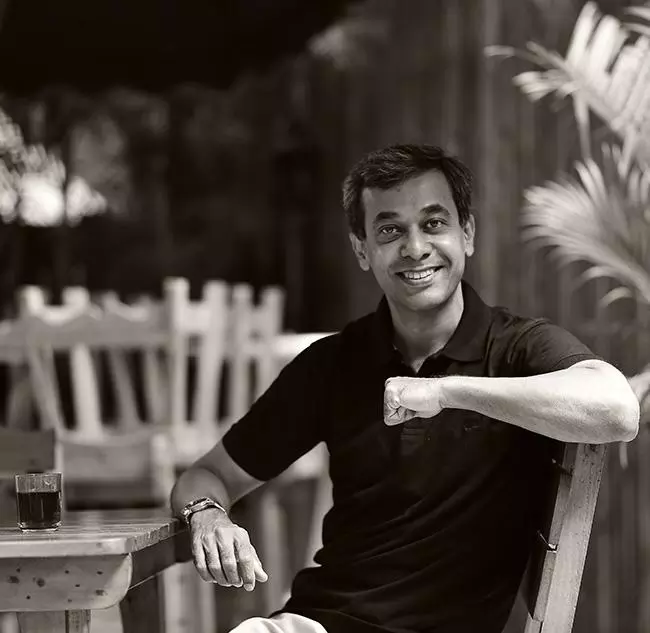
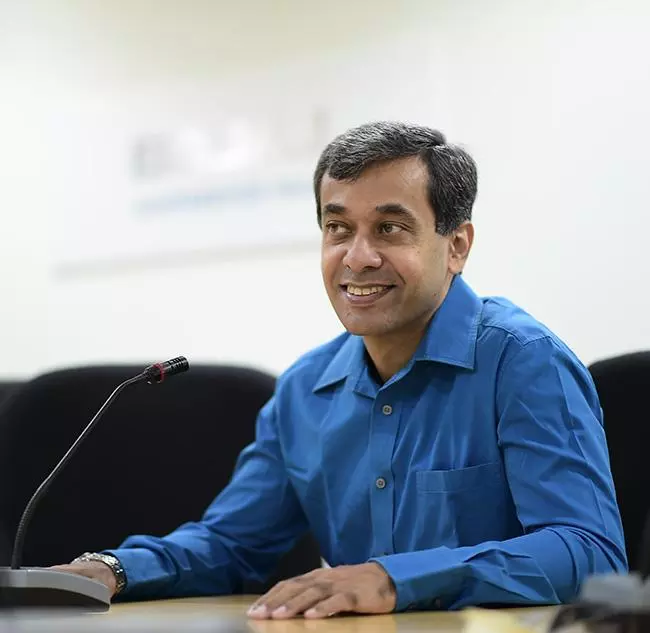
This page is written by Anil Dagia — NLP Master Trainer, ICF PCC Coach, ICF Mentor Coach, creator of Emotional Fitness Gym®, and architect of an experiential emotional intelligence model that integrates Jenga, NLP, somatic processes, and coaching-based transformation.
If you want the bigger ecosystem around this work, continue here:
- The Integrated Guide to NLP, ICF Coaching & Emotional Intelligence
- About Anil Dagia
- Media & Press
- Work With Anil Dagia (Right Fit / Not Right Fit)
Bottom line: this workshop is different because it does not stop at teaching emotional intelligence. It uses gamification, NLP, somatic awareness, and coaching to help people become more emotionally intelligent in lived, embodied, relational reality.